SOL struggles as Solana TVL slides and memecoin demand fades

cointelegraphPublished on 2025-12-12Last updated on 2025-12-12

Abstract

SOL, the native token of the Solana blockchain, has struggled to maintain prices above $145 amid declining network activity and reduced demand for decentralized applications. The total value locked (TVL) on Solana has dropped by over $10 billion from its September peak, while weekly DApp revenues fell from $37 million to $26 million. Memecoin demand, a key driver for Solana, has weakened significantly since October’s market crash, contributing to a 67% drop in decentralized exchange volumes. Although Solana’s transaction count increased by 6%, network fees declined by 21%. SOL’s funding rates indicate low bullish leverage demand, reflecting weakened trader confidence after a 46% price decline over three months. Despite positive developments like the Firedancer mainnet launch and new products from Kamino, a sustained recovery to previous highs remains uncertain.

Key takeaways:

  • SOL funding rates signal low bullish conviction after a 46% price drop, despite Firedancer’s launch and rising Solana network transactions.

  • Solana DApp revenues and DEX activity have weakened sharply, suggesting broader market fatigue even as Solana’s ecosystem grows.

Solana’s native token, SOL (SOL), has failed to sustain prices above $145 for the past four weeks. A decline in network activity amid reduced demand for decentralized applications has negatively impacted SOL’s outlook.

With Solana’s TVL now down more than $10 billion from its September peak, onchain metrics are flashing signs that user participation is cooling faster than expected.
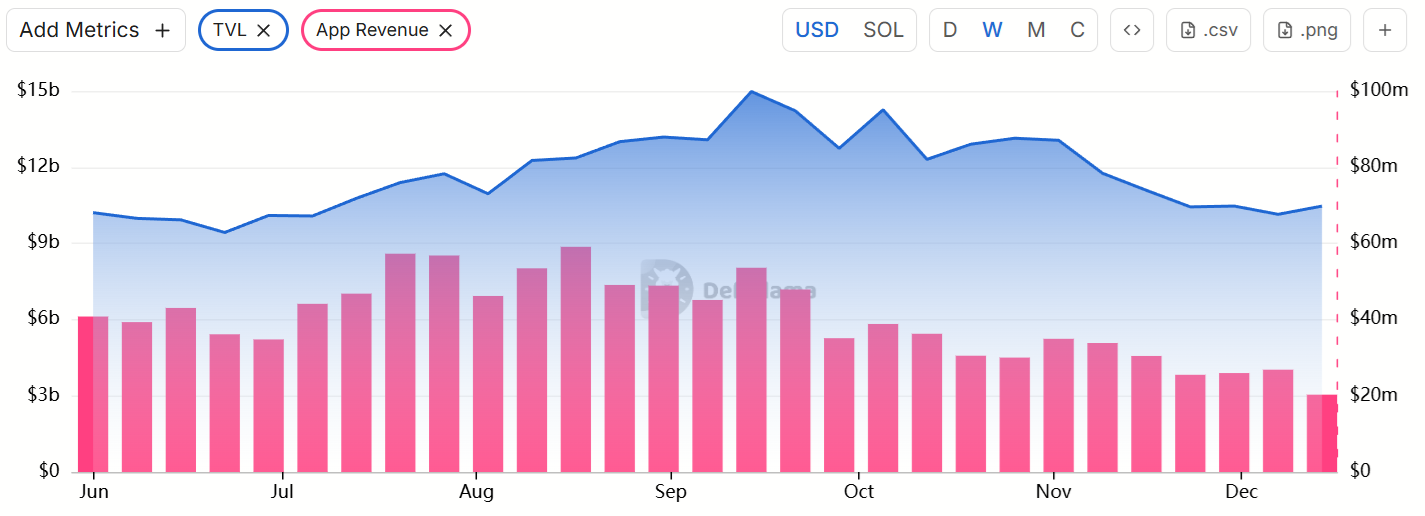
Solana TVL (left) vs. 7-day DApp revenues (right), USD. Source: DefiLlama

The total value locked (TVL) on Solana has been in decline since reaching its all-time high of $15 billion in September. Falling smart contract deposits increase the immediately available SOL supply for sale. Meanwhile, revenues from decentralized applications (DApps) on Solana dropped to $26 million per week, down from $37 million two months earlier.

Traders’ appetite for memecoins has also weakened since the cryptocurrency market flash crash on Oct. 10, an event that exposed critical flaws in leveraged positions and the overall liquidity of smaller altcoins. Regardless of whether derivatives markets amplified the move, traders became less comfortable with DEX platforms following the $19 billion liquidation event.
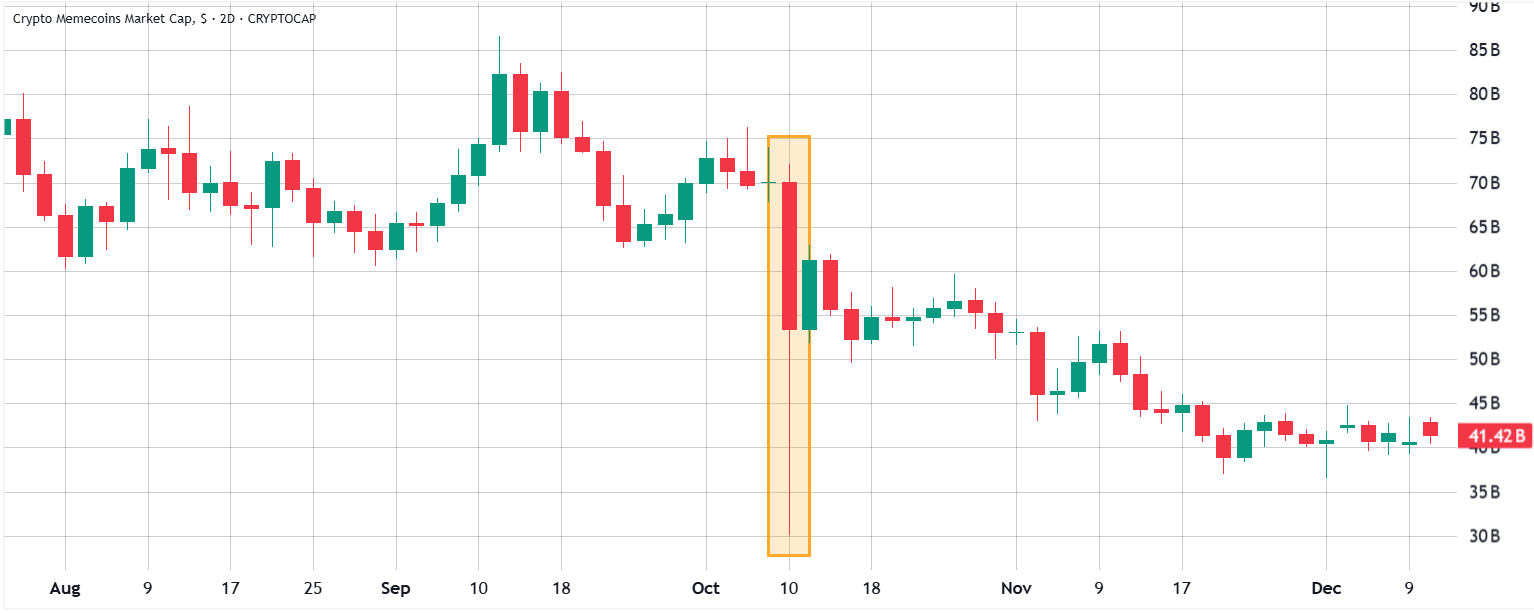
Memecoin market capitalization, USD. Source: TradingView

Memecoins have been a major driver for SOL, especially after the Official Trump (TRUMP) launch in January, which pushed decentralized exchange (DEX) volumes on Solana to $313.3 billion that month. According to DefiLlama data, this activity has since dropped by 67%, partly explaining the softer revenue trends across Solana DApps.

Still, the reduced demand for blockchain-based applications may reflect a broader market slowdown rather than a specific weakness in Solana.
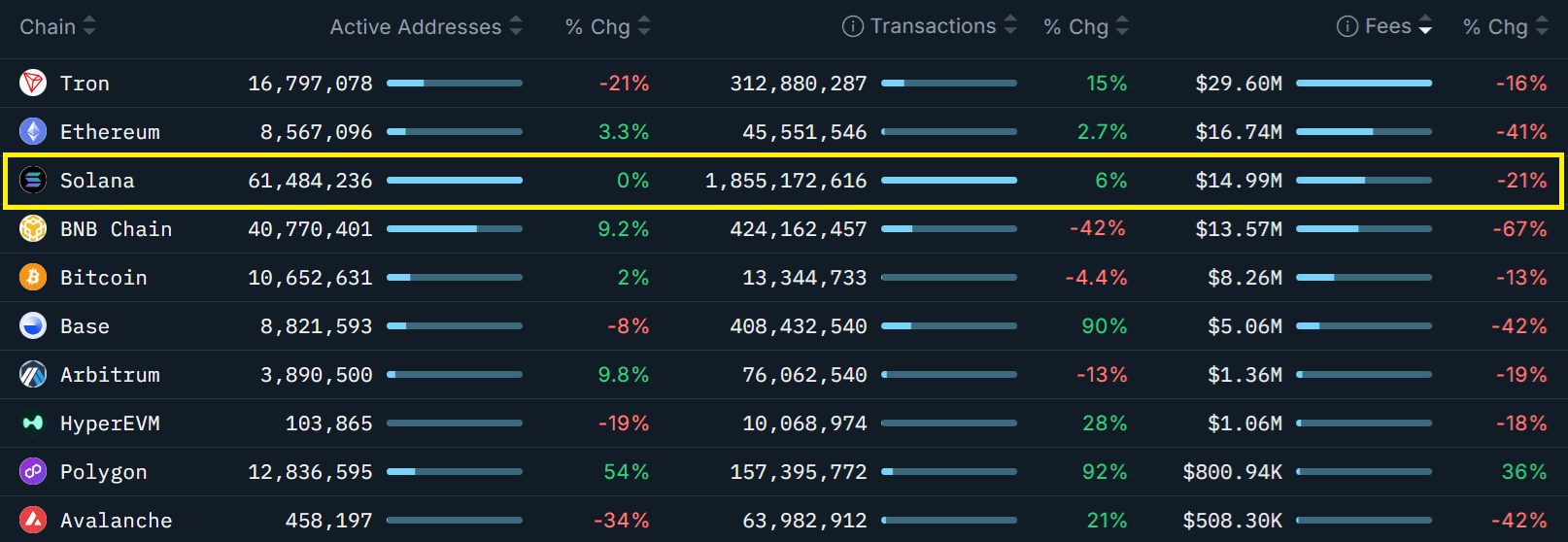
Blockchains ranked by 30-day network fees. Source: Nansen

Solana network fees fell by 21% over the past 30 days, yet competing blockchains experienced steeper declines. Fees on the BNB Chain dropped 67%, while Ethereum saw a 41% decrease over the same period, according to Nansen data. Additionally, the number of transactions on Solana increased by 6%, while activity on the BNB Chain decreased by 42%.

SOL long leverage demand vanishes

SOL perpetual futures can provide a useful gauge of traders’ sentiment, as exchanges charge either buyers (longs) or sellers (shorts) based on leverage demand. In neutral conditions, the funding rate typically ranges between 6% and 12% per year, with longs paying to keep their positions open given the cost of capital. Conversely, a negative funding rate signals broader bearish sentiment.
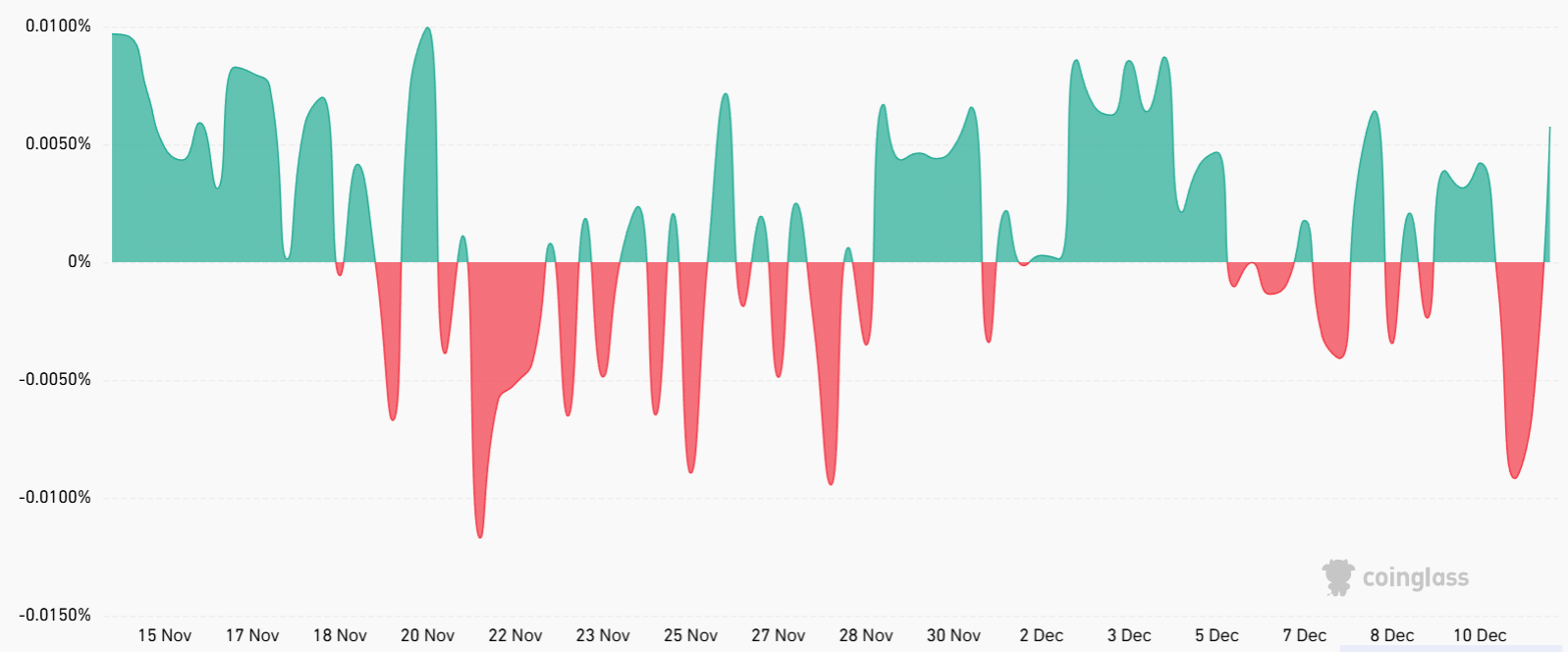
SOL perpetual futures 8-hour funding rate. Source: CoinGlass

SOL’s annualized funding rate stood at 6% on Friday, showing weak demand for bullish leverage. The unusual 11% negative reading on Thursday should not be interpreted as heavy demand for bearish positions, as market makers moved quickly to stabilize imbalances. Still, it may take time for bulls to rebuild conviction after SOL’s 46% price decline over three months.

Several recent developments in the Solana ecosystem are expected to draw renewed investor interest, including Friday’s mainnet launch of Firedancer, a new validator client designed to expand processing capacity. The project took more than three years to build under the guidance of Jump Trading, one of the industry’s top market makers. Developers reported a strong response after the validator node re-synced in under two minutes.

Related: J.P. Morgan taps Solana for Galaxy’s tokenized corporate bond issuance

Kamino, the second-largest Solana DApp by TVL, also announced new products on Friday, including fixed-rate and fixed-term borrowing, offchain collateral, private credit and an onchain Bitcoin-backed institutional credit line. Kamino’s $69 million in annualized fees and an average 10% annualized yield on deposits offer a clear indication of the ecosystem’s expansion.

Whether SOL can reclaim the $190 level last seen two months ago remains uncertain, and it is unlikely that improved validation software or expanded DApp offerings alone will restore the confidence needed to support a sustainable bullish trend.

This article is for general information purposes and is not intended to be and should not be taken as, legal, tax, investment, financial, or other advice. The views, thoughts, and opinions expressed here are the author’s alone and do not necessarily reflect or represent the views and opinions of Cointelegraph. While we strive to provide accurate and timely information, Cointelegraph does not guarantee the accuracy, completeness, or reliability of any information in this article. This article may contain forward-looking statements that are subject to risks and uncertainties. Cointelegraph will not be liable for any loss or damage arising from your reliance on this information.

Related Reads

When Hyperliquid Steals Solana's 'Internet Capital Market' Script

The article "When Hyperliquid Steals Solana's 'Internet Capital Markets' Playbook" discusses Solana's struggles to maintain its "internet capital markets" narrative by 2026. Despite its initial success as a high-performance "Ethereum killer," SOL's price has underperformed, dropping significantly compared to other major cryptocurrencies. Solana's vision of a global, on-chain trading network for all assets is being challenged not primarily by Ethereum, but by Hyperliquid. Hyperliquid, evolving from a perpetual contracts platform into a dedicated financial infrastructure Layer 1, has become a major beneficiary of the shift of derivatives trading from centralized exchanges to on-chain. The article argues that for high-frequency financial trading, a specialized, performance-focused chain like Hyperliquid may be more suitable than a general-purpose ecosystem like Solana. Further compounding Solana's issues was a major $200+ million exploit on its key perpetual protocol, Drift, in April, which damaged market confidence. In response, Solana founder Anatoly Yakovenko heavily promoted the protocol Phoenix as a replacement, boosting its visibility but not its trading volume, which remains far behind leading platforms. Solana supporters have launched a public critique of Hyperliquid's decentralization, pointing to its limited validators and closed-source code. Critics, however, note Solana's own declining validator count and centralization metrics. This strategy has also caused internal friction, with developers of other Solana protocols expressing discontent over the foundation's perceived favoritism towards Phoenix. The conclusion is that Hyperliquid's rise represents a challenge to the "general-purpose blockchain" narrative, proving that the core of a capital market might be a specialized trading engine rather than a broad ecosystem. If Solana cannot regain dominance in derivatives, it risks remaining a "meme coin paradise" while its grand "internet capital markets" ambition slips away.

marsbit1h ago

When Hyperliquid Steals Solana's 'Internet Capital Market' Script

marsbit1h ago

When Hyperliquid Steals Solana's 'Internet Capital Markets' Playbook

The article discusses how Solana's grand vision of becoming an "Internet Capital Markets" platform is facing significant challenges in 2026, primarily from the unexpected rise of Hyperliquid. Solana's performance has weakened, with its token SOL experiencing the largest price decline among major cryptocurrencies. Its core narrative of building a global, chain-based marketplace for all assets is under pressure both internally and externally. Hyperliquid, originally a perpetual futures exchange, has evolved into a dedicated Layer 1 financial infrastructure network. Its focused, trading-centric approach is attracting capital and challenging the assumption that a "general-purpose" ecosystem like Solana is necessary for a capital market. Hyperliquid's success suggests that for high-frequency trading, superior performance, liquidity, and user experience may be more critical than a broad application ecosystem. Internally, Solana's strategy suffered a blow from a major hack on the Drift Protocol in April, resulting in over $200 million in losses. In response, Solana founder Anatoly Yakovenko has heavily promoted Phoenix as a new decentralized perpetual futures platform on Solana. While this boosted Phoenix's visibility, its trading volume remains far behind leading platforms. Solana's community has launched a rhetorical attack against Hyperliquid, questioning its decentralization due to its limited validator set and closed-source code. Critics, however, point out Solana's own decreasing validator count and increasing centralization of stake. This focus on "decentralization metrics" has also caused internal friction, with other Solana ecosystem developers expressing discontent over the foundation's perceived favoritism towards Phoenix. The article concludes that the rise of Hyperliquid represents a challenge to the "general-purpose blockchain" narrative, proving that an efficient trading engine might be more central to a capital market than a vast ecosystem. If Solana cannot regain dominance in the derivatives space, it risks remaining a "meme coin paradise" rather than achieving its ambition of hosting global assets.

链捕手1h ago

When Hyperliquid Steals Solana's 'Internet Capital Markets' Playbook

链捕手1h ago

Trading

Spot
Futures

Hot Articles

Discussions

Welcome to the HTX Community. Here, you can stay informed about the latest platform developments and gain access to professional market insights. Users' opinions on the price of SOL (SOL) are presented below.

活动图片